Indigenous Land Rights
Doctoral research and the nonfiction book TITLE FIGHT combined to provide a powerful expose of the tactics used by major iron ore miner, Fortescue, against the Yindjibarndi people in the Pilbara region in the far north of Western Australia. This showed how the community was deliberately divided so that Fortescue was able to mine Yindjibarndi country without the agreement of the community, even though the community had their rights to land recognised by the High Court of Australia.
The company has since generated more than $70 billion in income from this mining.
A compensation is currently before the Federal Court of Australia.

–> An Indigenous fight with Fortescue makes a case for reform,
Australian Financial Review
Indigenous Marine Rights
With the support of community Elders and Indigenous colleagues at Oxfam Australia, I contributed to a campaign that led to legislative reform in NSW to decriminalise cultural fishing.
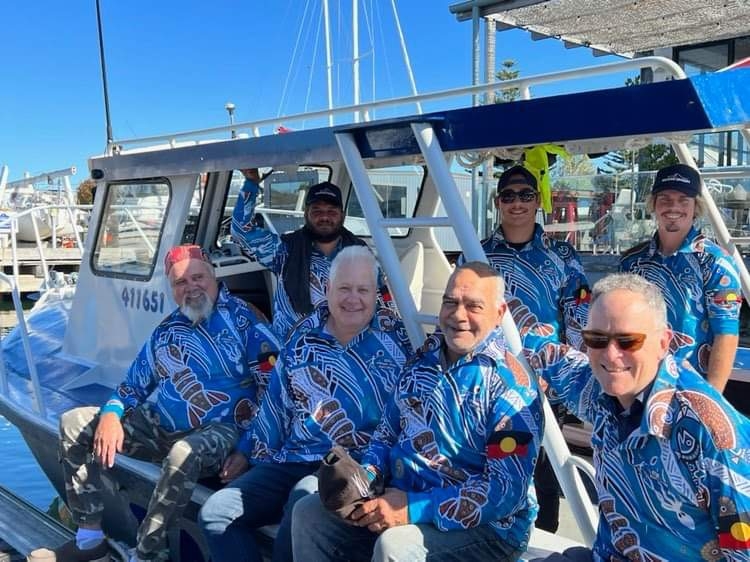
This campaign involved research that showed how Aboriginal people were more than 20 times over-represented in prosecutions for fishing-related offences. Oxfam supported a consultancy for Wally Stewart (far left in the photo below) so that he could pursue economic opportunities for his community.
This culminated in the winning of a shark monitoring contract with the NSW government—the elders are seated at the front and the crew at the back of the boat used to carry out this work.
Related articles
- Cultural fishing: Rights to an ancient practice left unprotected, Oxfam
Community Development
Following consultations with Oxfam Australia’s First Peoples Advisory Committee, I coordinated, edited and wrote part of the report In Good Hands which highlighted the effectiveness of community-led service providers in a range of sectors. The report was based on research that showed how well-resourced Aboriginal medical services could provide preventative health care that reduced the flow of people into the hospital system.
This report was used to secure additional federal funding to support backbone infrastructure for these organizations.