The Australian
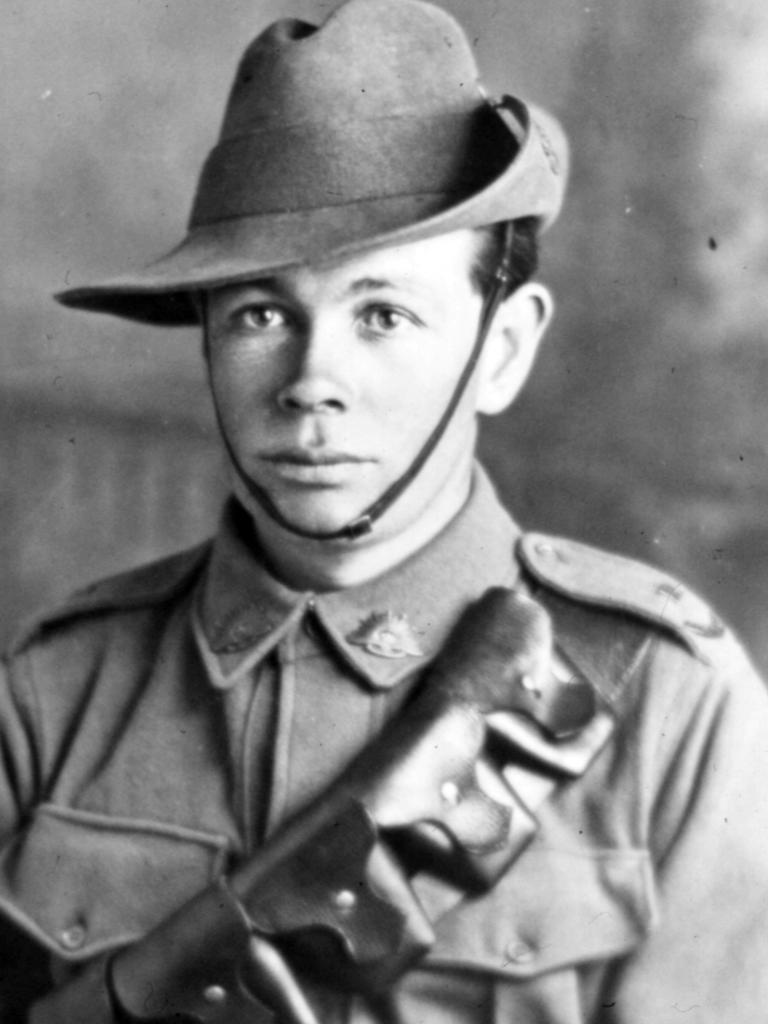
When Charles Bean wrote his 12-volume official history of Australia’s involvement in World War I, he made a passing reference to just one Aboriginal Digger, a private who was highly decorated in the epic battle of Mont St Quentin on August 31, 1918, when the Australians overcame the German stronghold.
William Irwin rushed and captured three separate machine gun posts. He attacked a fourth, was wounded and later died from his injuries.
Using the vernacular of the time, Bean wrote that “an Australian half-caste, [who] after attacking like Cartwright, was mortally wounded”. Like the Unknown Soldier, Irwin was left nameless in Bean’s account, even though he was awarded the Distinguished Conduct Medal for his bravery while George Cartwright won the Victoria Cross.
Bean’s omission emerges in Serving our Country, in a fine chapterabout the service of the 1000 or so Aboriginal men who, despite being initially prevented from enlisting, served in Australian forces during the Great War.
The chapter is written by Worimi man and University of Newcastle professor John Maynard, who asserts this is the only reference to an indigenous soldier in Bean’s vast work.
In World War II, about 3000 to 4000 Aboriginal men and women enlisted, and Aboriginal service continued in significant numbers during the Vietnam War. More recently, Aboriginal and Torres Strait Islander soldiers have defended the remote north of the country through units such as the North-West Mobile Force.
This book, edited by non-indigenous academics Joan Beaumont and Allison Cadzow, has a deeper mission than war service. It examines how many Aboriginal Diggers returned home to face racism and exclusion.
After risking their lives, most were excluded from being granted soldier settlement blocks, even when the allocations were for their traditional land.
Aboriginal veterans were inspired by black American activist Marcus Garvey. In 1920, two veterans established a Sydney branch of Garvey’s United Negro Improvement Association. Four years later, they formed the Australian Aboriginal Progressives Association, the nation’s first Aboriginal activist group.
The AAPA articulated what Maynard describes as a “pan-Aboriginal identity and a national agenda”. Three of its prominent office-bearers, Dick Johnson, Ben Roundtree and Edward Walker, were war veterans.
Maynard writes that the AAPA was such a potent political force that NSW police set out to destroy it. The origins of this book stem from a four-year research project funded by the Australian Research Council. Led by professor Mick Dodson, a Yawuru man, the project embarked on an ambitious oral history program known as Yarn Ups. Dodson himself conducted many of the 200 interviews, which can be found on the website ourmobserved.anu.edu.au. That the book looks closely at the implications of war service through the lens of “citizenship” is a positive indeed, but in so doing some of the authors stray from the core purpose of the research project: to document the contributions of Aboriginal Australians to war efforts.
In this regard, the World War II chapter by Beaumont and Tristan Moss is brief and disappointing, especially given this conflict involved the largest number of Aboriginal people sent into harm’s way.
They dwell on enlistment policy and the formation of indigenous units but are perfunctory in their references to some of the extraordinary Aboriginal people who served.
Little is said about who they were, where they came from and what they did in the war. Not much use is made of primary sources such as war records and letters back home.
In the case of fighter pilot Len Waters, the authors note he served in “the Netherlands East Indies (now Indonesia)”. They say nothing of how this Gamilaraay man, one of 11 children, made his way from shearer to fighter pilot.
Nor do we learn about the 95 missions he flew with 78 Squadron, including one in which an unexploded shell became lodged near the fuel tank. “(It was) the smoothest landing I’ve ever made,” Waters says on the website.
And nothing is said about how he became “just another blackfella” when he took off his uniform, and how he struggled after the war. For more on Waters, readers should turn to Peter Rees’s new book, The Missing Man, which I will review in these pages soon
These omissions seem unforgivable when made by academics and researchers who have benefited from government research funding.
Noah Riseman’s chapter on Vietnam makes amends. He makes good use of the Yarn Up interviews to produce an informative and engaging read. We learn that five of the 108 men who fought at Long Tan were Aboriginal Diggers.
The army of the 1960s provided a haven free of racism for these Diggers as camaraderie and mateship prevailed.
Riseman recounts a wonderful story of mateship between Aboriginal Digger Bill Coolburra, from Palm Island, and his non-indigenous mate George ‘‘Snowy’’ Wilson. The two were so close they became known as “twins”.
When then prime minister Harold Holt visited Nui Dat in 1966, he heard the story of these twins and asked Wilson where his brother was.
He replied: “My twin brother is out on the frontline doing some sort of job there; that’s where I should be, with him.”
That job was Coolburra’s work with the legendary Tunnel Rats. Wilson then told Holt that his brother was “a full-blooded Aboriginal … and his name is Bill Coolburra”.
While there are some great chapters in this book, the weaknesses raise issues about how the book was managed. Surely the ARC’s protocols for a work of such significance to First Australians should require Aboriginal and Torres Strait Islander people to have a direct role in editorial oversight.
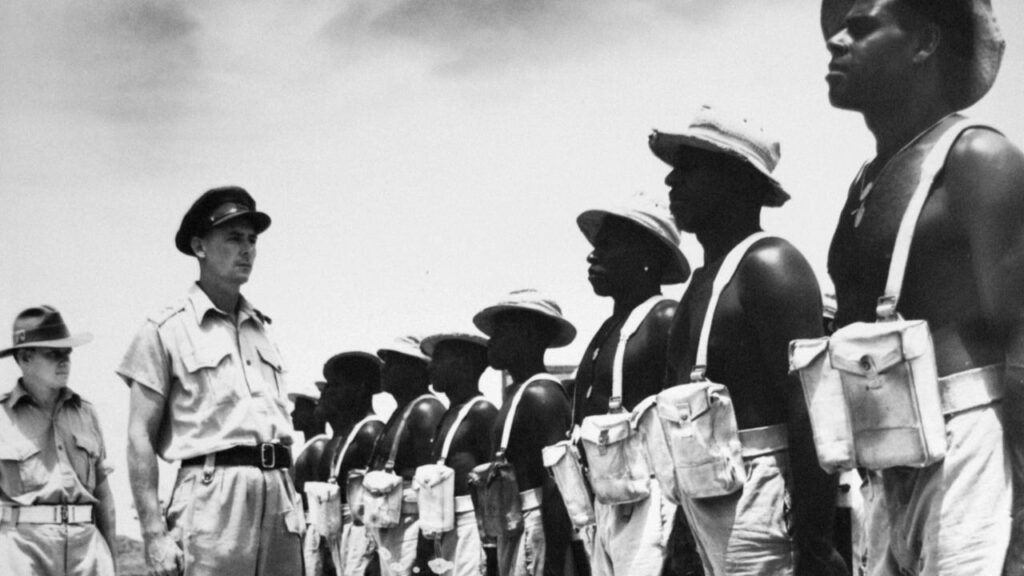
The featured image shows the Torres Strait Light Infantry Battalion on Thursday Island during World War II.
Paul Cleary has a PhD in indigenous policy and his books include the World War II history The Men Who Came Out of the Ground.
Serving Our Country: Indigenous Australians, War, Defence and Citizenship
Edited by Joan Beaumont and Allison Cadzow
NewSouth, 445pp, $39.99
Leave a Reply