The Australian
When Kate Grenville’s novel The Secret River, about the massacre of Aboriginal people on the Hawkesbury River in the early 1800s, was put on stage a few years back, the comments from some audience members, at the performance I attended, were incredulous. “Did that really happen?” one glumly asked a friend. Others made superficial comments about the T-shirts worn by the Aboriginal actors.
Getting people interested in the lopsided conflict on Australia’s colonial frontier between rifle-wielding colonials and spear-carrying Aborigines is not easy. It was violent, it makes for grim reading, and there remains an element of denial.
So the challenge for any author writing about this period is to take the reader beyond the violence and introduce them to the people on both sides, and how they interacted.
The three books under review succeed on this score in different ways. They take us close to the action, but they also get up close and personal as the First Australians and the new arrivals meet face-to-face.
As such, they serve to deepen our understanding of how Australia was established through frontier conflict while making no attempt at negotiating a treaty, as was done in the US, Canada and New Zealand.
Stephen Gapps’s The Sydney Wars begins with the questions he asked as a boy. Why he walked to school along Bungarribee Road and why his western Sydney suburb was once called The Blacks’ Town.
Only recently did I learn that there was once an Aboriginal camp along a creek where I played as a kid, and I’ve felt the crunching of shells from ancient middens as I’ve walked by the mangroves where I now live. But I learned a whole lot more from reading Gapps’s fine book, including the conflict that took place in my Sydney suburb.
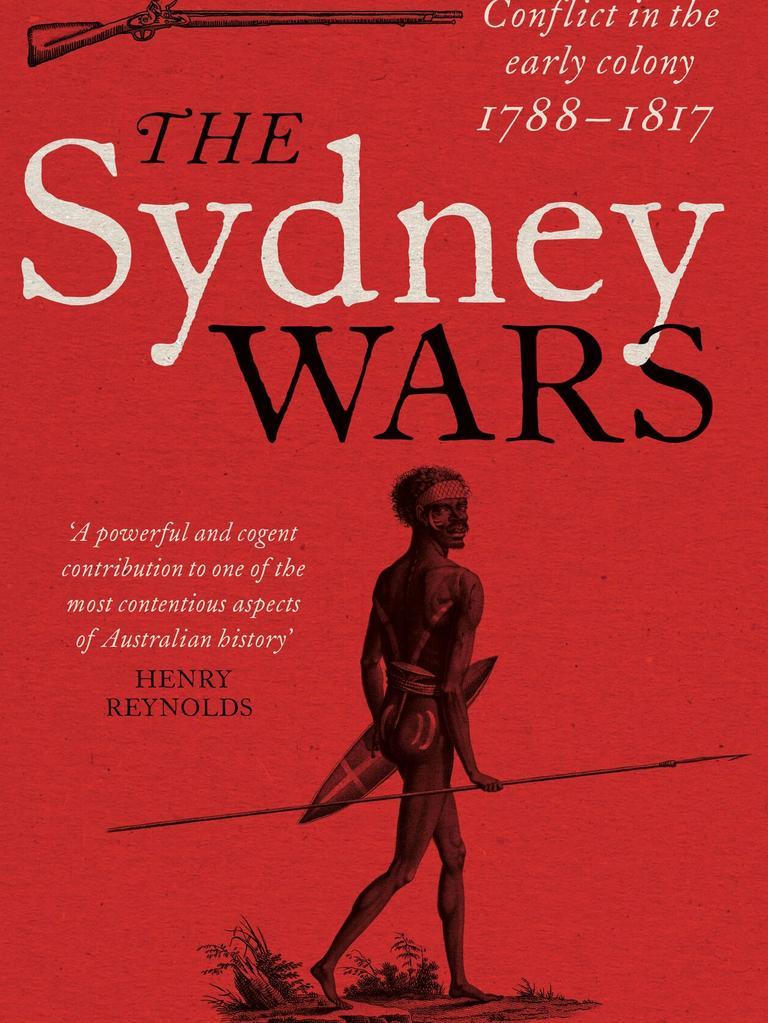
Gapps takes a sensory approach to telling history as he describes the booming sounds that heralded the colonial arrival at Sydney Cove and the quick expansion into the interior.
At Sydney Cove, the marines “fired several volleys” from their muskets as the officers toasted the success of the new colony. The working day began with a bell that was rung “at gunfire”, while every cannon and gun in the colony was fired on June 4 to mark the king’s birthday.
This account is largely based on extensive use of original documents found in archives. Gapps also ploughed through records in the National Library of Australia and the original works of governors Arthur Phillip and John Hunter, and marine captain Watkin Tench.
The military nature of the Sydney settlement and its expansion are explored in detail. Each chapter begins with a hand-drawn map that describes the operations and contacts that take place.
Gapps demonstrates how the Sydney people, as he calls the Aborigines, fiercely resisted the new arrivals. “The colonists became increasingly hemmed in at Sydney Cove, unable to venture out safely without firearms.” The contempt shown by the Sydney people to the newcomers was seen in the savage attacks on those who strayed beyond safety. One convict was found in October 1788 with his head beaten to jelly and a spear driven through it.
This fierce resistance reflected the immediate impact the colony had on food resources. The Sydney people could see the change in fish stocks in the harbour, and they forcibly tried to retrieve some of it within months of the colonial arrival.
With the colony in a precarious position in early 1789, perhaps it was no coincidence that smallpox devastated the large Aboriginal population around the harbour from March onwards. While Tench noted that First Fleet surgeons had brought “variolous matter in bottles”, Gapps writes that “Phillip would never have condoned its intentional spread”. That may be the case, but other senior officers could have done so.
From this time onwards, the Sydney people were on the back foot. Despite the rise of warriors such as Pemulwuy and his son Tedbury, they were fighting an unwinnable war.
As the colony expanded to the west around Parramatta, north to the Hawkesbury and southwest to Camden and beyond, Aboriginal people were either pushed further out or hunted down as new land was awarded to settlers. Attacks on settlers by Aborigines, often motivated by the need for food, only served to make the campaign all the more ferocious.
The Sydney Wars ends in 1817 because this marks the culmination of a determined military campaign orchestrated by governor Lachlan Macquarie to drive “terror” into the hearts of the Sydney people and bring about their subjugation, as he wrote in his precise instructions in March 1816.
This military exercise included the April massacre of a clan of 14 Aboriginal people, mainly women and children, at Appin in Sydney’s southwest, who were attacked in the early hours. The Appin people had left their fires burning at night as a decoy while they slept in the bush. But in this instance the cry of a baby gave them away.
Gapps’s analysis of the varying accounts of what happened next is a fine example of his forensic skills. He argues convincingly that the group did not commit a “forced suicide” from steep cliffs, as some have suggested. They did not leave themselves without an escape route, as shown by the ability of the soldiers to clamber down the gorge the next morning to retrieve bodies.
Instead, he makes the case that they were hunted down as they sought to escape. He writes that the attack at Appin was part of the plan to secure the Cumberland so that Macquarie could expand the colony westwards over the Blue Mountains.
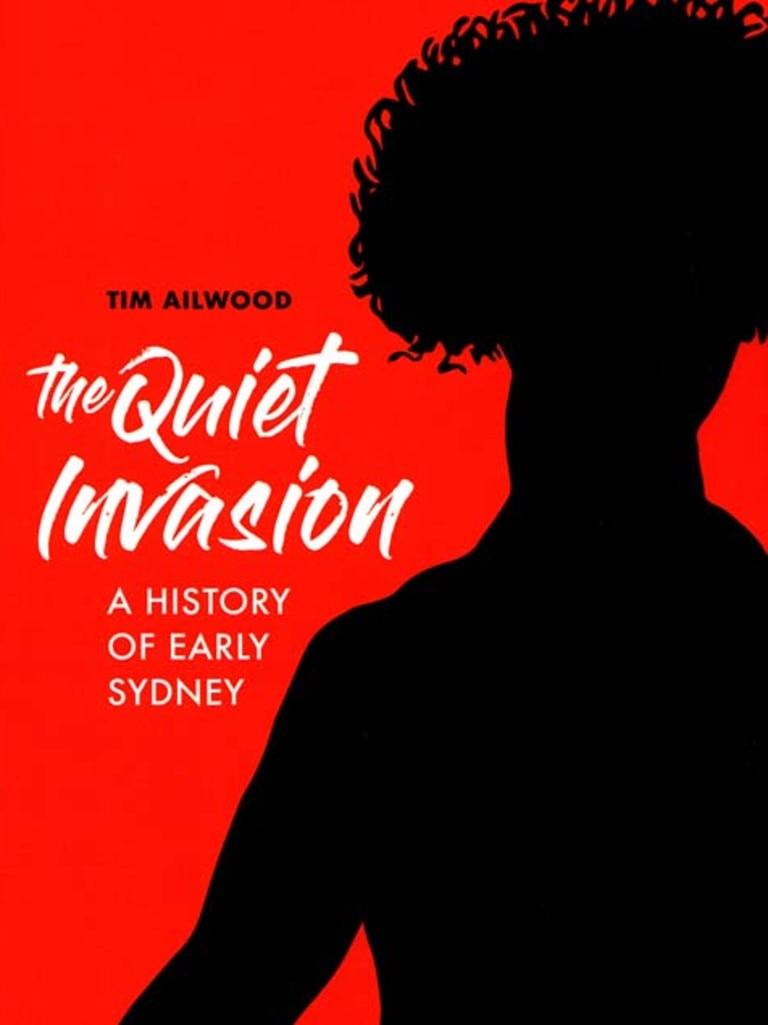
While Gapps provides an arresting account of warfare in modern Australia’s first 30 years, Tim Ailwood’s The Quiet Invasion is a poignant, tenderly written book about the first four years of colonial settlement in the Sydney region.
Ailwood emphasises the expansion of the colony in that period. His “quiet invasion” is in sharp contrast to Gapps’s interpretation. But both books convey the impression that the colonisation of NSW was fatally flawed because there was no thought given to reaching a peaceful settlement so as to accommodate the indigenous population.
Ailwood gathers considerable detail on the interactions between the people who arrived on the first three fleets and the Aborigines, whom he refers to as “the Australians”. He challenges Robert Hughes’s contention in The Fatal Shore that an orgy followed the landing of the female convicts on February 7, 1788, noting that the only primary source for this claim is someone who was not ashore at the time. He adds that the shortage of women meant many female convicts had already formed relationships with the servicemen of the First Fleet.
Ailwood explores the human drama that unfolded when Phillip ordered marines to mount a reprisal raid and bring back six Australians, and “if that proved to be impracticable, to put that number to death”. First Fleet astronomer and surveyor William Dawes was chosen to join the party but he had formed such enduring friendships with the Australians that he initially refused the order. He was court-martialled and forced to leave Sydney.
Ailwood also covers the smallpox outbreak and notes that the virus was used by the British in North America, though he reaches the same conclusion as Gapps.
Men such as Dawes would be the exception as the numbers of settlers and freed convicts exploded in the decades to come. Many parts of the interior were heavily populated just like Sydney, and this created the imperative to drive the Australians off their land. When they fought back or stole livestock for food, they were hunted down.
The Myall Creek massacre in 1838 involved the deaths of 28 Wirrayaraay people in the fertile Gwydir region of northern NSW. The place names around Myall Creek tend to give the game away: Slaughterhouse Creek and Murdering Flat.
Lyndall Ryan, coeditor of Remembering the Myall Creek Massacre, has documented massacres from the early colonial settlement until 1870, and some of them involved the killing of 60 or more people at a time. The massacres in Tasmania in the late 1820s were unrelenting. But what makes Myall Creek unique is that 11 of the perpetrators were tried and seven — all of them former convicts — were hanged.
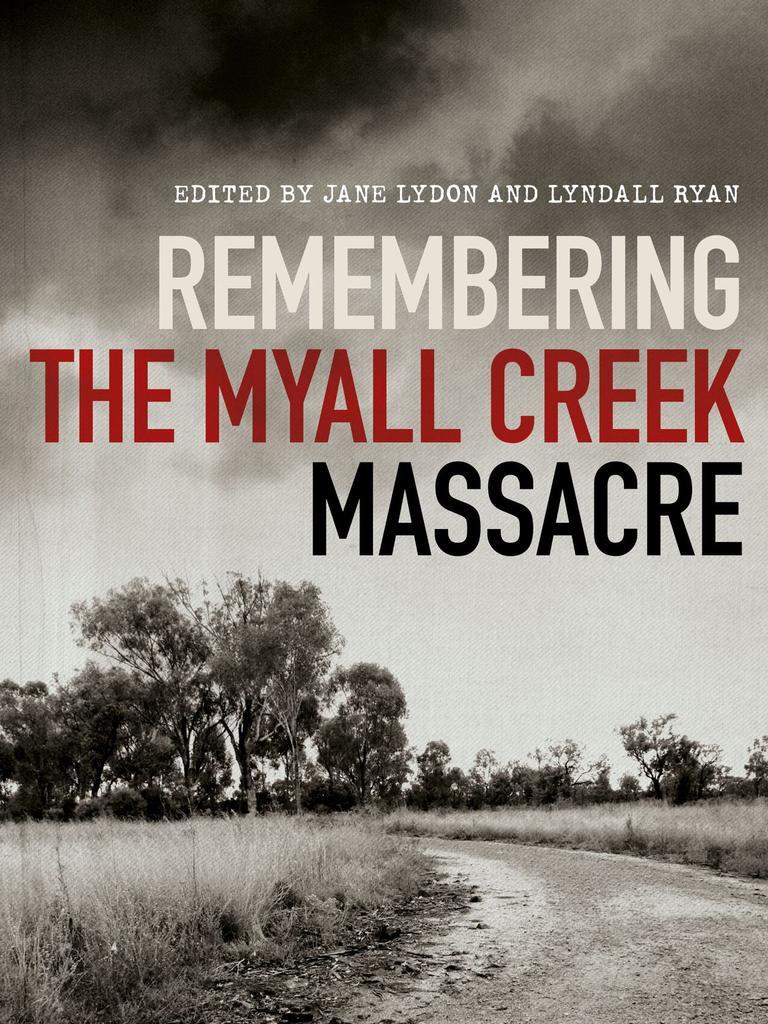
But the ringleader, John Fleming, evaded capture and trial. The book makes a telling point about Fleming having been raised in the violent Hawkesbury region of Sydney.
The point of remembering Myall Creek is explained well in the chapter Walking on Bones, which asks what Australians should do with the thousands of human remains held in museums in Australian and overseas.
Myall Creek now has a memorial site where the remains have been interred. But the 2014 proposal to create a National Resting Place for these remains — like an Australian War Memorial for the First Australians — has fallen on deaf ears.
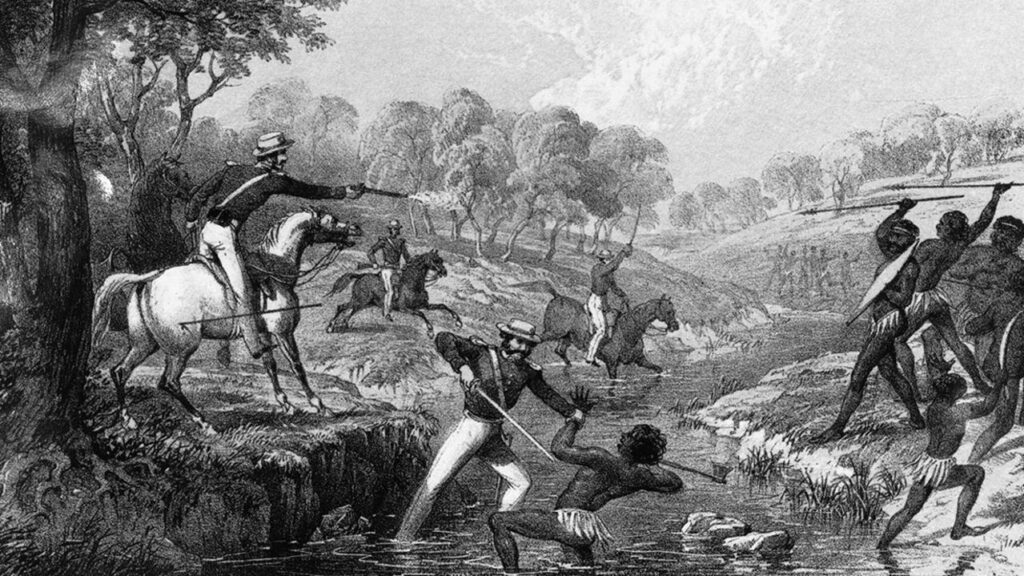
The featured image shows WL Walton’s lithograph ‘Mounted police and blacks’ (1852) which depicts the massacre of Aboriginals in January 1838 near of Moree, in northern NSW, at Waterloo Creek (also known as Slaughterhouse Creek). The nearby Myall Creek massacre happened five months later.
Paul Cleary is a journalist and author. In his PhD thesis, he researched indigenous policy and history.
The Sydney Wars: Conflict in the Early Colony, 1788-1817
By Stephen Gapps
NewSouth, 319pp, $34.99
The Quiet Invasion
By Tim Ailwood
Australian Scholarly Press, 383pp $39.95
Remembering the Myall Creek Massacre
Edited by Jane Lydon and Lyndall Ryan
Leave a Reply