The Australian
The lives and hopes of two 17-year-old Timorese entrepreneurs, Jacinto Alves and Caetano Francolene, say so much about the great potential of the young nation of East Timor, and the daunting challenges facing the country’s new Prime Minister.
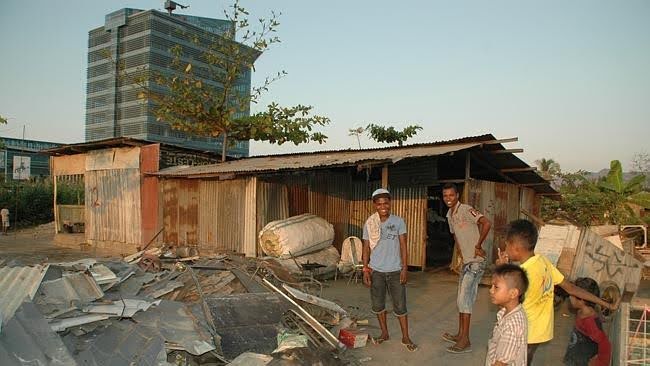
Born during the final years of Indonesian occupation, the boys started school in 2002, the year in which the country became independent. And while their schooling was interrupted by the crisis of 2006-07 and limited to primary education, this hasn’t stopped them launching their own business, which operates in a shantytown in the middle of Dili.
Using handmade carts, they collect scrap metal and sell it to dealers, earning themselves about $200 a month. They send most of the money back to their families in the border district of Bobonaro so their younger siblings can attend school.
Jacinto and Caetano are among the 50 per cent of East Timor’s 1.1 million people below the age of 19, and the country’s future depends on finding many more young entrepreneurs who can turn a buck out of next to nothing.
Jacinto says he left school at a young age because “there was no money for school”, and after drifting into Dili he and his mate became metal merchants about 18 months ago — the Arthur Daleys of Dili, no less.
He says the money is good but their business could become the victim of public-sector crowding out — literally — as they operate in a place designated for more high-rise government buildings.
Among the many shining new offices built in Dili when oil prices were high is the $28 million, 11-storey head office for the Ministry of Finance. Construction work finished a year ago but the building remains unoccupied. If finished, it will provide a very generous 20,000sq m of office space for the ministry, while the people living nearby have no running water.
Jacinto and Caetano don’t like the building, and it’s an extravagance that grates with many locals when they see the government providing little in the way of basic services, especially in their home district. “The government does not help us. The roads are bad, we have no clean water or electricity,” Jacinto says.
The Australian catches up with the pair outside their makeshift premises, which doubles as their residence, located on the site of a colonial-era airfield that was defended by Australian commandos during World War II. Australians from the 2nd Independent Company, a special forces unit, were sent to Dili in December 1941 and fought the Japanese on the airfield in a night-long siege when they invaded on February 19, 1942.
The strong support given to the commandos throughout 1942 sowed the seeds of a close relationship between the two countries that remains in place today, even though this friendship was tested by the Whitlam government’s tacit role in the Indonesian invasion of 1975, and the more recent dispute over Timor Sea oil and gas.
Dealing with the present impasse is just one of many challenges facing the country’s new PM, Rui Araujo, 50, whose government was sworn in on Monday after the resignation of resistance hero Xanana Gusmao.
East Timor has blown far too much of its oil windfall on glamour projects such as the finance building and, now that oil prices are tumbling, it will be more difficult for Araujo to address the young population’s desperate needs.
Araujo is a member of the opposition Fretilin party, so his appointment is a mark of Gusmao’s deep respect for the former health minister’s ability. Many Timorese share Gusmao’s view that the country is in very capable hands.
The greatest hope locals have is that Araujo will focus on human needs and building human capital, rather than building grand edifices and other white elephants.
Araujo’s past performance as a minister indicates that the human dimension is one of his strong points. When he became health minister in 2002, there were just a handful of doctors in the country. Araujo helped broker a deal with Cuba, which sent more than 500 doctors as a stopgap measure, while hundreds of Timorese doctors were trained in Cuba. Those trainees have since returned and the country has made considerable progress in improving health outcomes, for children especially.
The World Bank’s Sydney-based regional director Franz Drees-Gross says the country has halved infant and child mortality since becoming independent and is doing well for a post-conflict nation. But, privately, some of Drees-Gross’s colleagues are scathing of East Timor’s progress. The bank’s country strategy focuses on three key areas that need improvement: delivery of basic services such as health and education; building infrastructure; and developing the non-oil economy.
In his swearing-in speech on Monday, Araujo emphasised the need for government to address its substandard delivery of basic services and to diversify the economy, but he remained wedded to the idea of sinking large amounts of public money into building infrastructure for the oil industry.
He said that with such a young population, the government’s focus should be “directed to the needs and aspirations of the largest group of our society — children and young people”, and on understanding the nature of poverty and addressing it.
The two are, of course, related, which is why any sensible approach would involve the government backing young entrepreneurs such as Jacinto and Caetano instead of emphasising dubious publicly funded developments such as the south coast oil precinct.
Addressing poverty, according to Araujo, means the government “must provide our most underprivileged citizens with the tools to escape from it”. On Monday he strongly endorsed economic diversification, but in the same breath said the petroleum industry was part of this strategy.
“Economic diversification must start to take on a new dynamic through intelligent investment in the more profitable economic sectors for Timor-Leste, such as tourism, agriculture and fisheries, and the petrochemical industry,” he said in his speech. “Furthermore, we will continue investing in a dynamic and integrated petroleum industry.
“The development of the south coast is projected and will contribute to the creation of jobs and jump-start the industrial sector as a whole. Petroleum and natural resources should be the driving forces for strengthening the traditional economic sectors.”
The preferential treatment for petroleum also involves demanding that Australia come to the negotiating table and agree to a maritime boundary based on the principle of the median line. To pursue this end, the government has created a Council for the Final Delimitation of Maritime Boundaries that will include former prime ministers and other eminent people.
This means the country still wants to have the 2006 treaty with Australia declared void by the International Court of Justice. Despite reports in the Fairfax media that the two countries have begun maritime boundary negotiations, Foreign Minister Julie Bishop denies this is the case: “Australia is not currently in permanent maritime boundary negotiations with Timor-Leste,” she says. “We are engaged in consultations with Timor-Leste to seek an amicable settlement of the Timor Sea Treaty arbitration and the case before the International Court of Justice, and these consultations are ongoing.”
The 2006 treaty was centred on the Greater Sunrise field, which is controlled by Woodside. The treaty lifted Timor’s share from 18 per cent under the 2002 Timor Sea Treaty to 50 per cent. But Timor then learned that Australia had engaged in espionage during the negotiations and has since gone to the ICJ to have the treaty declared void. In its place, it wants a full maritime boundary, which it believes will deliver a greater revenue share.
A Woodside spokeswoman says the company and its partners remain “committed to developing the Greater Sunrise fields”, adding: “We value our relationships with both governments and seek alignment that allows the timely progression of the development for the benefit of all stakeholders.”
Bishop rejected calls by Timor supporters in Australia, including Jesuit academic Frank Brennan and Josephite nuns, for Australia to enter into good-faith negotiations and observe the rule of law by returning to the ICJ jurisdiction for maritime disputes.
Australia withdrew from this jurisdiction just before Timor became independent, in a move that UN documents later revealed was aimed squarely at denying Timor the right to the umpire’s ruling.
Asked if Australia should return to the ICJ, Bishop says: “Australia prefers to resolve our differences with all countries, and particularly with close friends such as Timor-Leste, through dialogue and negotiation rather than adversarial litigation.
“This is how Australia has delimited all of its maritime boundaries to date. We have underlined this point regularly with Timor-Leste.”
While Timor can accuse Australia of not observing the rule of law, Araujo will have to deal with the legacy of Gusmao’s failure to act in this regard.
Late last year, Gusmao sacked eight foreign judges and advisers, sending a clear signal to members of the judiciary who might rule against the government.
The sacking coincided with corruption cases involving former ministers, and appeals against tax assessments in the Dili District Court by oil giant ConocoPhillips, by far the country’s biggest foreign investor.
The tax assessments were the work of a Nigerian national, Bobby Boye, a convicted felon who went on to scam $3m from the country’s treasury. Timor’s former finance minister Emilia Pires, who was the brains behind the new ministry building along with Natural Resources Minister Alfredo Pires, used the assessments to orchestrate a corporate-bashing extravaganza that was aired in 2012 on the ABC’s 7.30 and Four Corners. Pires claimed the ultimate revenue haul could be in the order of $US3 billion.
The upshot is the total amount in dispute is a mere $US237m, or 1.4 per cent of the $17bn paid in taxes by the company since oil production began more than a decade ago.
Timor’s airing of this dispute in the media has done untold damage to the country’s reputation as a place to invest. As a ConocoPhillips spokeswoman tells The Australian: “We had hoped that constructive dialogue would resolve the disputed amounts. This was not forthcoming and ConocoPhillips initiated proceedings in the Timor-Leste courts and under international arbitration.
“The international arbitration hearing concluded in Singapore during June 2014 — we are still awaiting a decision. As of September 30, 2014, the value of disputed assessments paid by ConocoPhillips was $US237m.”
ConocoPhillips has appealed against the payment of the assessments and this has led to 28 matters now before the Dili District Court. Last year, the court ruled in favour of ConocoPhillips in seven cases.
If Araujo really is concerned about the future of people such as Jacinto and Caetano, and so many other young Timorese, then he will ensure that the judiciary is independent and that the rule of law applies in his young country.
Abandoning the defence of the Boye tax assessments could be a good way to rebuild trust with foreign investors.
This would put Timor in a much stronger position to demand that the rule of law be applied in the Timor Sea.
Paul Cleary served as an adviser to the East Timor government and is the author of two books on the country’s history.
Leave a Reply