The Australian
How a Kansas master’s degree helped shape the Norwegian oil and gas industry
When Norwegian economist Arve Johnsen undertook a master’s degree on a Fulbright scholarship in 1959-60, his country was making a modest living from fishing, forestry and shipping. Norway‘s per capita income was in line with that of Greece. Following the discovery of North Sea oil a decade later, Johnsen’s studies proved to be instrumental in driving Norway‘s strategy to maximise the industrial development and financial benefits from this newfound wealth, which today has made the country one of the wealthiest nations in the world.
One of the courses Johnsen took at the University of Kansas was called Advanced American Economic Development, which in part covered the history of US petroleum and the rise of J.D. Rockefeller’s Standard Oil.
The key insight that Johnsen gained from this course was that Rockefeller’s control of the rail networks and pipelines from the Pennsylvania oilfields, rather than primary production alone, had been the source of his immense wealth.
Johnsen, the son of a railway station master, had grown up in Norway‘s rural south, far from the North Sea. But the discovery of oil in 1969 by the American firm Phillips Petroleum reminded Johnsen of what he had learned in Kansas, and he set about developing a strategy to pipe the oil and gas onshore to be processed by Norwegian industry. Johnsen was able to apply his knowledge of the US oil industry when he was appointed secretary of the Industry Department, before becoming the first chief executive of Statoil in 1972. He held this position for 16 years.
Applying the Rockefeller approach to Norway involved creating state-owned businesses that could own the pipelines and the plants in order to capture the super-profits that could be earned from this monopoly control. A major obstacle was the undersea Norwegian trench, which dropped down to 360m between the oil fields and the Norwegian coast.
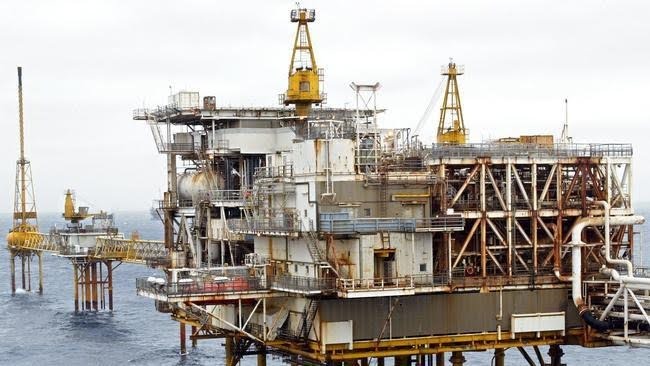
Norway‘s first major oil field, Ekofisk, was located in about 60m of water near the median line between Norway and Britain.
When Johnsen and his team first raised the plan of piping Ekofisk’s oil and gas to Norway, Phillips Petroleum executives said the depth and ruggedness of the trench made it impossible. Phillips prevailed and landed the gas at Emden, West Germany, and the oil at Teesside, UK. These pipelines went down to depths of just 60-70m.
Johnsen realised Phillips was about to do a Rockefeller on Norway because these pipelines were destined to become the trunk lines for future oil developments. So Johnsen proposed that a new dedicated company be established to own and operate the pipelines, with Norwegian state oil firm Statoil having a 50 per cent shareholding in Norpipe. The chairman of this new company, Jens Christian Hauge put this proposal to William Martin, Phillips vice president and later CEO. Martin was shocked and shouted, “This is immoral!”
But Phillips caved in, unable to afford a lengthy delay, and the Ekofisk field was so big that it was going to be very profitable even without control of the pipeline.
Norway had lost the first battle, but it wasn’t about to lose the war. Johnsen was determined to build a pipeline across the deep trench, despite the costs and risks. He saw his role as that of a general running a military campaign, taking such risks as were necessary to secure the prize of petroleum-led industrialisation on Norwegian soil. To capture what he called the “strategic heights”, Norway would have to send divers to extreme depths.
The discovery of a second major oilfield in 1973 made Johnsen even more determined. He commissioned his own study which involved sending divers to the bottom of the Norwegian trench to investigate the seabed. It took many more years for Johnsen to convince parliamentarians of the merits of what became known as the Statpipe project, but in 1981 they backed it. Statpipe comprised four pipelines with a combined length of 894km, 296m down at its deepest point. Statpipe cost about $9 billion in 2013 figures, making it by far Norway‘s biggest and costliest pipeline project.
Norwegian diver Angus Kleppe, who worked on Statpipe alongside ex-navy divers from Australia, says the pipe-laying was run like a military operation.
“We have typical naval discipline on how we perform our dives, all the time looking ahead to see if we were going to run into any problems,” he says. “That is one big difference in how we’ve been working in Norway and how they are working in other places. Also a bit of influence from Australian navy divers, who were conscientious in regards to safety.”
Today, Norway has several thousand kilometres of pipelines linked to a vast network of petrochemical plants along its coastline. These plants have enabled the country to capture a share of super-profits from oil production. The Norwegian government estimates that 90 per cent of the profits from its oil production accrue to the state. This revenue haul has created the world’s largest future fund, now worth more than $1 trillion.
Adapted from the book by Paul Cleary Trillion Dollar Baby: How Norway Beat the Oil Giants and Won a Lasting Fortune, published in August by Black Inc. and Biteback (UK).
The featured image shows Ekofisk oil field in Norway (Picture: Alamy).
Leave a Reply